Journal · For growers · 5 min
How many hives does an orchard need?
One colony an acre is the rule of thumb for top fruit. Here is when to go higher, when to go lower, and when to have them delivered.
Growers ask us this every January. The honest answer is that it depends on the crop, the variety and what else is flowering within a mile and a half, but there are good starting points.
The rule of thumb
- Apples and pears: one strong colony per acre.
- Cherries and plums: one and a half per acre; the window is short and often cold.
- Blueberries and tunnel strawberries: two to two and a half; the flowers are less attractive to bees than the hedgerows around them.
- Field beans and hybrid rape: fewer per acre, but in larger drops of at least four colonies.
Our pollination calculator uses exactly these rates and gives you a price for the season.
Strong colonies matter more than numbers
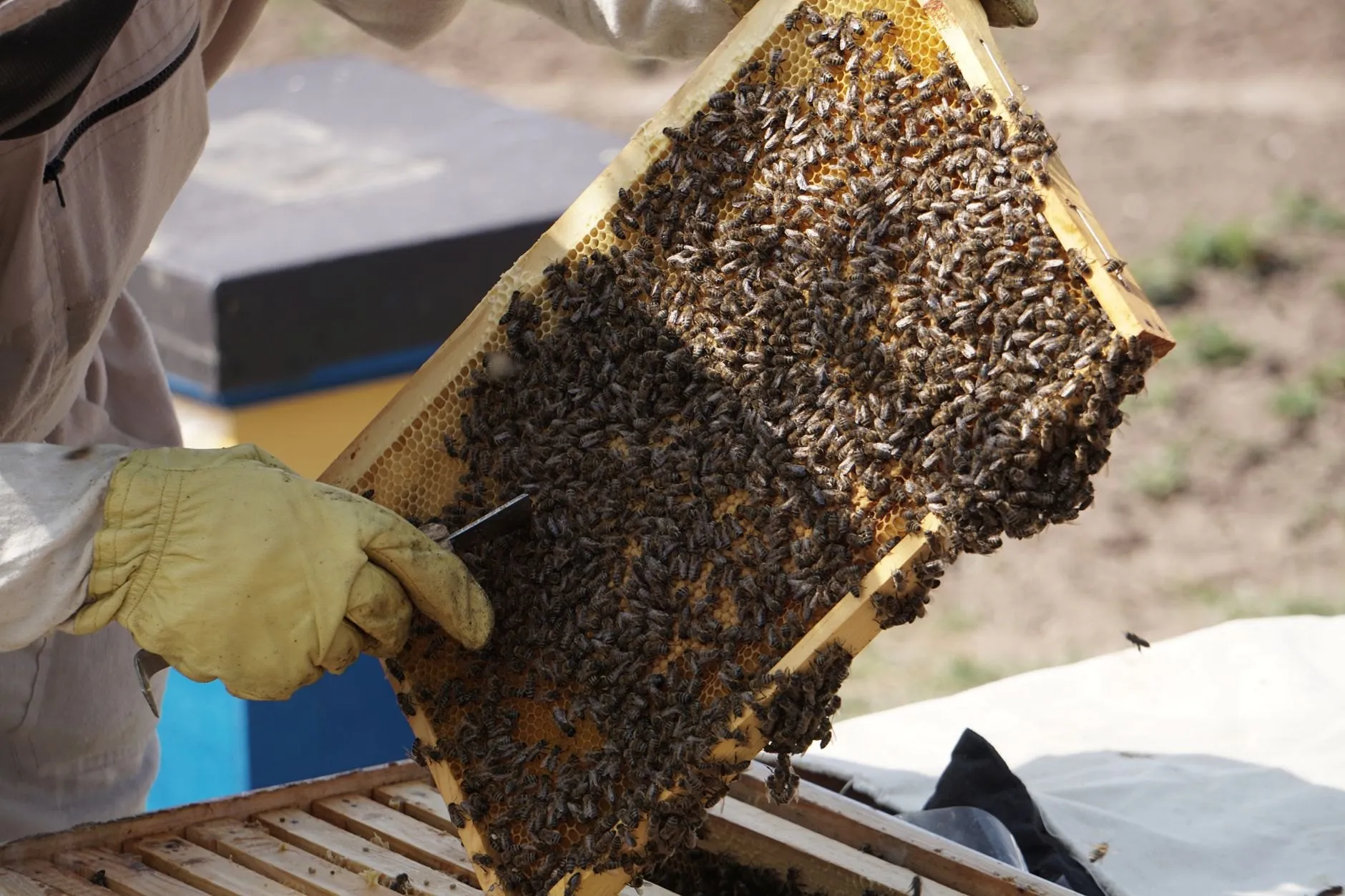
A colony with six frames of brood sends out far more foragers than a weak one. Every Keldmoor colony is inspected before it leaves and we do not charge for any that arrive under strength.
Timing is everything
Bees are loyal to the first good forage they find. Put them in too early and they learn the dandelions in the headland; too late and the king blossom has gone. We move them in at night, when the colony is home, and take them out the morning after petal fall.
Quick answers
When should hives arrive in an apple orchard?
When about 5 to 10 percent of the king blossom is open. Earlier and the bees find other forage first; later and you lose the best flowers.
Do I need to stop spraying while the hives are on site?
Tell us every product and date. Most fungicides are fine at dusk; some insecticides are not fine at all, and we will move the colonies before you spray.